UPDATE: T5's new answers, and our responses

What the Cornerstone Data Center Isn't Telling You

T5 has published a page about what its Grayslake campus "gives back". In early October it rewrote that page and added 26 new answers. They still raise more questions than they answer...

Nothing below disputes T5's arithmetic. Each figure is theirs. What changes is the timeframe and the wording they chose to put around it.

$1.4B+ in new local revenue over 20 years — taxes plus permit fees

What assumptions were used to calculate $70M/year, which the Grayslake Village T5 FAQ says is a "preliminary
estimate" and "subject to change/refinement"?
How much of that $70M is available to the Village of Grayslake and how much for taxpayer relief? What are the other costs incurred and revenue foregone during this 20-year period? If T5 becomes insolvent sometime within the next 20 years, what is Grayslake going to do to collect property taxes? Grayslake will be left scrambling to offload millions of square feet of concrete-reinforced buildings. What is Grayslake's contingency plan if the AI bubble bursts?

Quoted from their page
Up to 1,500 new jobs in the community

According to T5's updated answers, "Up to 1500" is temporary construction jobs over the 7-10 year build period:  As to permanent staff: "between 100-150 people per building," counting "security, physical infrastructure, network technicians, and customer employees." Not answered: How many permanent jobs filled by Lake County residents will this project create? The answer to the question of how many union jobs was that T5 has "project agreements with Labor". How many is that?

Quoted from their page
$0 increase in electric costs for residents and small businesses

Did T5 purchase ComEd? Unless it did, ComEd can charge its customers rates necessary to recover the costs of infrastructure investments, including those made to support large-scale data centers like T5 Chicago IV. Therefore, while Grayslake residents may not see a direct line item on their bills for the data center's electricity supply, they will ultimately bear the cost through higher utility rates.

Quoted from their page

Coming to Grayslake and Lake County

Some other things T5 is giving to Grayslake!

Here are a few things we'll also be welcoming to the area.
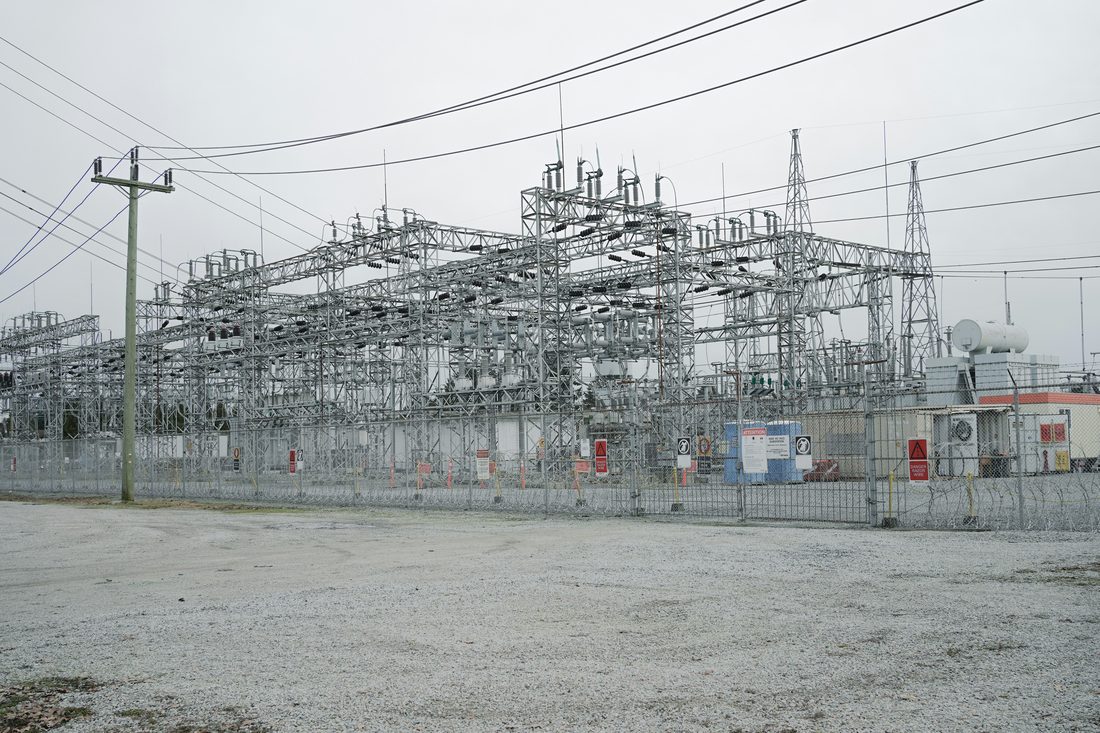
An electrical substation of the kind a 1.2 GW campus requires
Example of substation. Image for illustrative purposes only.

An electrical substation supporting a 1.2 GW hyperscale data center campus typically requires a physical footprint of 650,000 to 1,300,000 square feet (equivalent to 15 to 30 acres). 
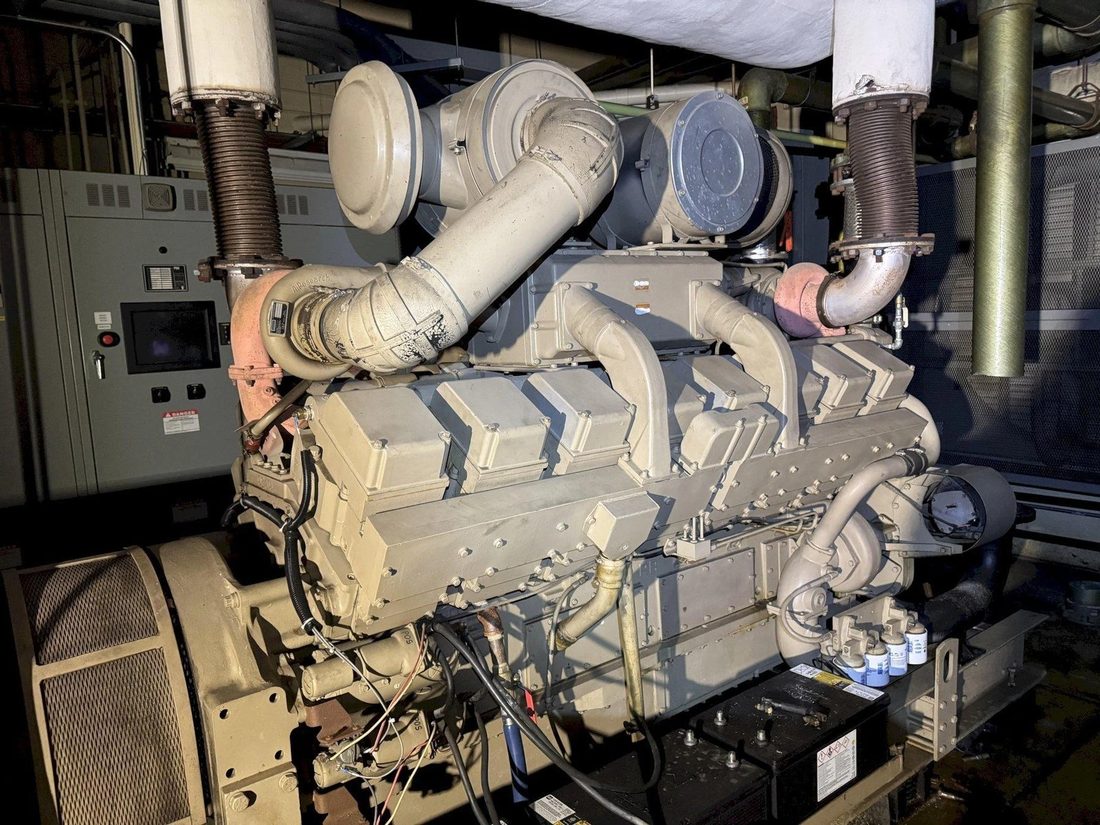
A diesel standby generator unit
Example of diesel generator. Image for illustrative purposes only.

To back up 1.2 GW of capacity requires roughly 468 of these diesel backup generators, and they all have to be tested even if they aren't used regularly. In times of electrical shortage such as heat waves, PJM, the regional transmission organization that supplies Grayslake's power, can and does direct large facilities with their own backup generation to switch to that backup instead of drawing from the grid. So during a grid emergency, these backup generators could all end up running at once. The same could be true if ComEd cannot supply enough power when T5 needs to be online in Q4 2027. (Our figure assumes 1.2 GW of backup at roughly 2.56 MW per generator. T5 now says the first two buildings, drawing 450 MW, will have 11 generators. See why those numbers don't add up.)
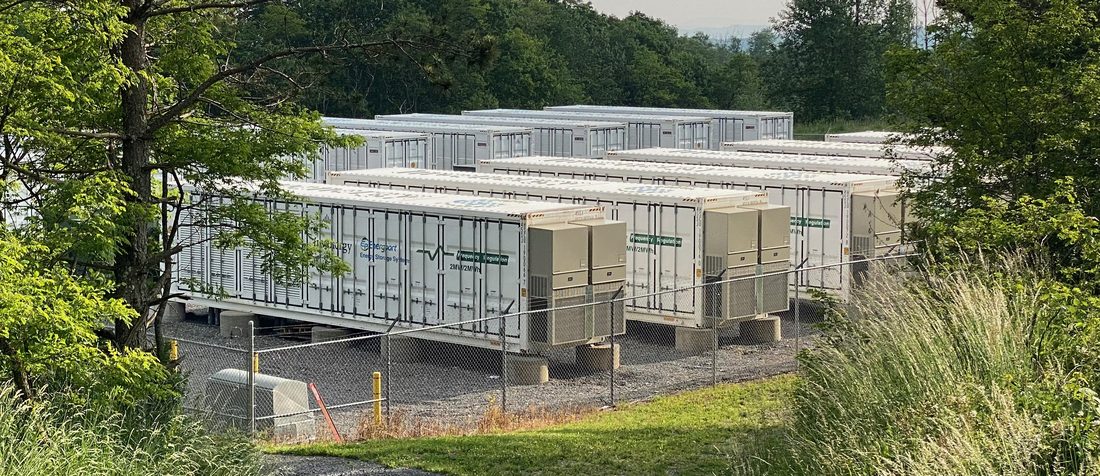
Containerised battery energy storage units
Example of BESS (Battery Energy Storage System). Image for illustrative purposes only.

To back up 1.2 GW of capacity, assuming 4MW batteries like the Vertiv EnergyCore, there will be 30-1200 of these in a Battery Energy Storage System. Typically these are lithium batteries, and when lithium batteries overheat they can burn, causing a condition called thermal runaway in which they create their own oxygen and generally have to be left to burn for as long as it takes for them to burn out. Look up Moss Landing, CA . (T5 now says there are "no BESS systems designed for Building 1 or Building 2," but lists a "UPS Batteries Analysis" among its studies. More below.)
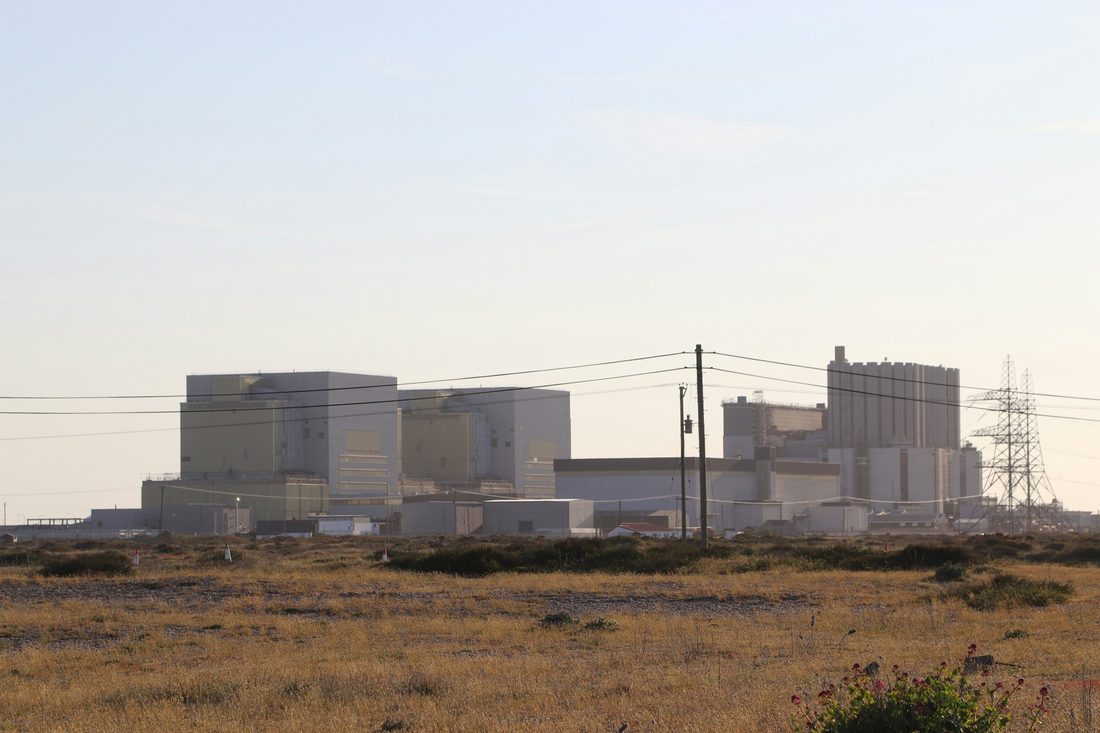
A hyperscale data center campus at scale
Image for illustrative purposes only.

"Up to 1,500" is doing a great deal of work in that sentence.

"Up to" sets a ceiling, not a floor, and one job is enough to clear it. Their supporting text describes construction work across a 7–10 year build, which ends when the build ends. How many full or part permanent jobs will be filled by Lake County residents?

Quotations from investingingrayslake.com, archived September 3, 2026; unchanged as of October 8, 2026. T5's Expanded FAQ now puts construction at "800 to 1,200 construction jobs" per building. See below.
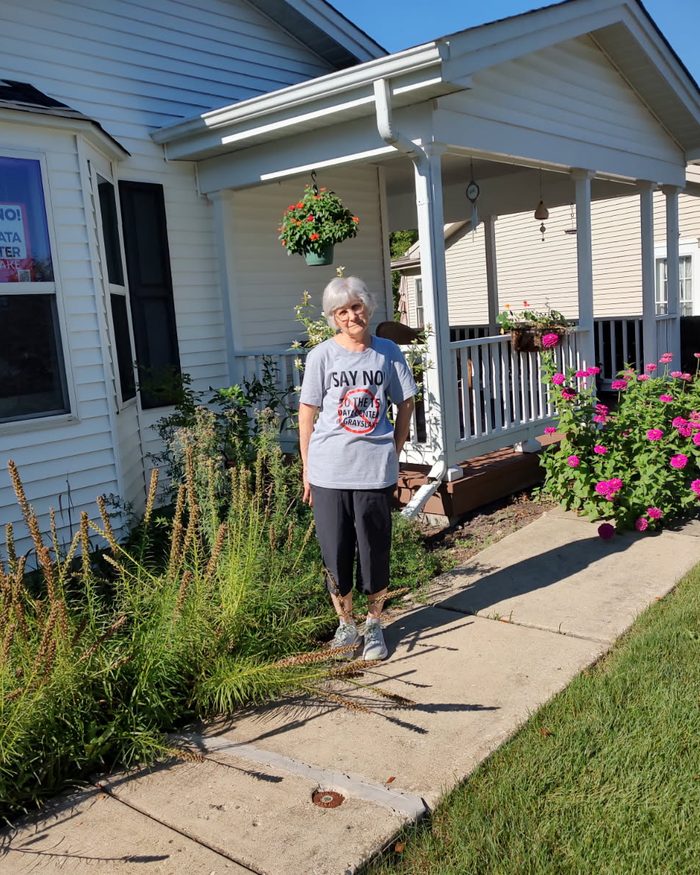
Jan S. standing on the front walk of her Saddlebrook Farms home, wearing a shirt reading "Say no to the T5 data center", with a matching sign in the front window and native plantings along the walk
Jan S. outside her Saddlebrook Farms home

What our neighbors say

"We moved to Saddlebrook Farms in September 2024 to be closer to our family. After doing some research on Data Centers, we became increasingly worried that this massive edifice would destroy the lovely natural environment we have at Saddlebrook. I have counted birds for Cornell University Labs for over 20 years and have NEVER seen the large number of species that we live with every day in Saddlebrook Farms. I am sad and angry that Saddlebrook residents were NEVER consulted when plans for this data center were made, yet, we are the ones who are RIGHT NEXT TO IT and will have to live with it every day. I have had cancer twice and I really don't want to do that again. We thought this would be our last home, a beautiful sanctuary to live out our last years. Not with noise, air, water pollution."

Jan SSaddlebrook Farms resident, 1/4 mile from T5 Hyperscale Data Center

Straight to the source

The questions we sent T5

In late September 2026, Grayslake residents received a brochure from T5 titled “From the Desk of Peter Marin,” that repeated many  of the above points about the development and its impacts and invited questions to be sent to [email protected]. Here are the questions we sent to that address. A resident received a reply from a Tusk Strategies email address in early October directing them to updates on investingingrayslake.com. That website now has an "Expanded FAQ" with answers to questions that closely track ours. We respond to those answers below.

Read the questions we sent (PDF)

Their new answers, examined

T5 rewrote its page. More words. Still missing pieces.

Grey text is quoted word for word from investingingrayslake.com as of October 8, 2026. Orange text is our response. Where a figure is ours, we show the arithmetic.

Read all 29 of T5's new answers, with our response to each →

Generators: does the math work?

T5 says "Building 1 will have 6 generators, and Building 2 will have 5 generators." Elsewhere: "Building 1 will only draw 300 MW (total utility load), and Building 2 will only draw 150 MW (total utility load)."
Response

Six generators backing a 300 MW building works out to about 50 MW per generator (300 ÷ 6). Five for 150 MW is 30 MW each. Standby diesel sets sold to data centers are typically around 2.5 to 3.25 MW each (for example, the 2,480 kW MTU sets and 3.25 MW units reported for other data centers). Either the generators back up only a small part of the load, or "generator" means something other than a single diesel set, or one of the numbers is wrong.

  1. What is the rated output of each generator, and what share of each building's load do they cover?
  2. If they don't cover the whole load, what happens to the rest during an outage?
  3. How many generators will the campus have at full build-out, not just the first two buildings?

Generator testing: one hour a month, or more?

T5 says Home page: generators "will be tested for less than one hour each month during the day." Expanded FAQ: "5-minutes weekly, 30-minutes monthly, and one 4-hour annual test."
Response Both can't be true every month. Weekly plus monthly tests come to about 50–55 minutes in a typical month (4 or 5 weeks × 5 minutes + 30). The month with the 4-hour test runs close to 5 hours. Over a year that's roughly 14 hours per generator (260 + 360 + 240 minutes). The schedule also covers testing only. Federal rules put no hour limit on emergency use, and the page doesn't address PJM, the regional grid operator, calling on backup generation during a grid emergency.

"No BESS"? Then what are the "UPS Batteries"?

T5 says "There are no BESS systems designed for Building 1 or Building 2." The same page lists a "UPS Batteries Analysis" among the studies submitted to the Village.
Response A data center's uninterruptible power supply (UPS) is itself a battery system. It carries the load in the seconds before generators start. "No BESS" answers a narrower question than the one we asked about large battery installations. What chemistry are the UPS batteries? How many megawatt-hours do they hold per building? What fire-suppression and thermal-runaway plan did the Grayslake fire department review? Our earlier estimate of battery units assumed a full 1.2 GW of backup storage; T5 now says there's no separate battery plant for the first two buildings, and we'll update that estimate if they publish what the UPS systems hold.

Sound: which limits, and which frequencies?

T5 says "An acoustical consultant analyzed existing sound levels (31.5, 63, 125, 250, 500, 1000, 2000, 4000, and 8000 Hz frequency bands)…" and the Board's limits are "expressed as A-weighted levels for continuous sound." The project is designed to "the lower 'night time' limits," and "the 44 dBA noise level to which the project is designed is equivalent to… A quiet library."
Response

The Illinois Pollution Control Board's nighttime limits in 35 Ill. Adm. Code 901.102(b) are set band by band in unweighted decibels, starting at 31.5 Hz (63 dB for Class B to Class A land). T5's own limits table starts at 63 Hz. The lowest band, the one its consultant says it analyzed, isn't in the table. A-weighting discounts low frequencies heavily, so a 44 dBA figure can sit comfortably under the limit while a low hum is still plainly audible indoors.

  1. What are the modeled levels in the 31.5 Hz and 63 Hz bands at the nearest homes, at night?
  2. The Board also bars "prominent discrete tones" (Section 901.106). Transformers hum at 120 Hz, and fans produce tones of their own. Did the study test for tones?
  3. A library is quiet for an hour. This is every hour of every night. Will the post-construction measurements T5 says are required before the use permit be made public?
  4. We asked what reference level T5 uses for "traffic on Peterson Road." The answer gives a design target instead. What is the Peterson Road number?

Water: the first fill, and three different comparisons

T5 says "Building 1 anticipates a total first fill… of 2,750,000 gallons, or less than three modern Olympic-sized swimming pools. Building 2… 1,250,000 gallons." Daily use afterward: 2,675 and 2,150 gallons per day, "the equivalent of 9 homes" and "7 homes."
Response

This is the first time T5 has put a number on the fill. That's progress. But:

  1. Two buildings take 4,000,000 gallons to fill, and only two are designed. The Village FAQ describes a campus of 11 buildings. What is the total at build-out?
  2. A 50 × 25 m pool holds about 660,000 gallons at the 2 m minimum depth, and about 990,000 at 3 m. 2,750,000 gallons is "less than three" pools only if you pick the deeper pool. At the minimum depth it is more than four.
  3. The home page says use after the fill is "comparable to that of just 8 to 10 homes." The FAQ's own figures are 9 homes plus 7 homes for two buildings, about 16, and the campus is planned for more buildings than that.
  4. T5 now describes long-term water use three ways: "8 to 10 homes" (home page), "less water than a typical car wash" (web version of the CEO letter), and "the same amount of water as a typical office building" (the printed mailer). Which is it?

Indirect water: a question about power, answered about cooling

T5 says "No. The type of cooling system used by T5 does not change the facility's indirect water usage… regardless of what cooling technology is used, Building 1 will only draw 300 MW… and Building 2 will only draw 150 MW."
Response We asked whether the campus increases water used to generate its electricity. T5 answered a different question, whether the choice of cooling changes it. The power plants serving 450 MW for just the first two buildings use water whatever the cooling design. At full load, around the clock, 450 MW is about 3.9 million megawatt-hours a year (450 × 8,760). The answer also confirms the scale: the first two buildings alone draw 450 MW.

Electric bills: what is actually binding?

T5 says "The obligations to directly pay for all dedicated physical infrastructure improvements are contained within the electricity connection obligations with ComEd." And the large-user rate class lets ComEd and PJM "spread their fixed costs across greater kWh, ultimately lowering their costs for all customers."
Response The binding part covers "dedicated physical infrastructure": the substation and the lines to the campus. The regional capacity and transmission costs we asked about are left to the rate class and state law, the same rules that apply to everyone. The Village itself backs the Illinois POWER Act to make data centers pay "beyond current state laws," which suggests current law isn't enough on its own. "Lowering costs for all customers" is offered with no figures. Where is the analysis?

Wetlands: suspended or withdrawn?

T5 says Home page and CEO letter: "indefinitely suspended." Expanded FAQ: "this application has been voluntarily withdrawn," "We do not have plans to resubmit it," and "The layout of the campus (while still speculative) does not rely upon mitigation of the dispersed wetland areas."
Response T5's own site now says two different things. Withdrawn is final; suspended can resume. If it is withdrawn, T5 can show the U.S. Army Corps of Engineers' confirmation and update the other two statements. Also note T5's own phrase: the campus layout is "still speculative." The Village approved this project in 2025.

The studies: listed, not shown

T5 says 21 studies, from an "Acoustics Study Report" to a "Thermal Impact / Ambient Temperature Analysis," were "submitted as required to the Village of Grayslake… We have provided pertinent summaries of each of these studies in the responses contained herein."
Response We asked whether the studies were published for public comment before the Board's vote. The answer doesn't say. Summaries written by the developer aren't the studies. In July 2026 the Village denied a public-records request for the project's cooling and containment plans, citing litigation. If the studies support T5's answers, publish them.

Accountability: who checks?

T5 says Commitments: "various requirements are contained within the zoning, building permit, and associated agreements." Monitoring: water, generator run-time and air quality "will be conducted and reported to the appropriate entity as required."
Response We asked which commitments on water, sound, emissions and jobs are binding. The answer doesn't name one. We asked what independent agency will monitor. The answer names none, and promises no public reporting. Sound isn't on the monitoring list at all.

Jobs: closer to an answer

T5 says "Each building takes approximately 2-years to build, and creates 800 to 1,200 construction jobs over the course of its construction." Permanent staff: "between 100-150 people per building," counting "security, physical infrastructure, network technicians, and customer employees."
Response This is the first real breakdown, and it confirms "up to 1,500" describes temporary construction jobs. The permanent figure counts customer employees, who don't work for T5, and gives no Lake County hiring number. On union labor, "project agreements with Labor" is not a count. How many permanent T5 jobs, and how many filled by Lake County residents?

Tax breaks: not just "eligible." Granted.

T5 says "No incentives were granted by the Village of Grayslake… As a qualifying data center, the campus is eligible for the statewide Illinois Data Center Investment Program… an as-of-right state exemption on equipment sales/use tax."
Response T5 applied for, and was granted, this exemption for the Grayslake campus. The Illinois Department of Commerce and Economic Opportunity's Data Center Investment Program 2025 Annual Report lists "T5@Chicago IV, LP," Grayslake, 2025, with a $250,000,000 investment commitment, an estimated $15,625,000 in tax benefits, and 20 new jobs. T5's Elk Grove Village and Northlake data centers are on the same list. So "eligible for" undersells it: the certification has already been granted. "No incentives were granted by the Village" is accurate only because this one comes from the state. The report's estimate is 6.25% of the $250 million commitment; the Mayor's own communications describe $18 billion of investment. What is the expected exemption at full build-out? And the certification counts 20 new jobs, not the 100–150 per building T5 gives elsewhere.

Ask them yourself on their contact us form. Then come back here and tell us what they said.